Showing posts with label Philippines. Show all posts

Friday, 26 August 2011

View over Pasig River, Manila, Philippines

Manila (Tagalog: Maynila; pronounced [majnilaʔ in Tagalog and / mənɪlə / (ə mə-zero), in English) is the capital of the Philippines. It is one of the sixteen cities composed of Manila.

Manila is located on the eastern coast of Manila Bay and is surrounded by Navotas and Caloocan in the north, Quezon City, north, San Juan and Mandaluyong east, Makati on the south-east and south of Pasay.

Manila, with a total population of over 1,660,714 seconds of 2007 census. Manila is the second most populous city in the Philippines back in Quezon City. The population of the area inhabited by only 38.55 km square, which is the most densely populated city of Manila in the world. Metro Manila is the most populous metropolitan area in the Philippines and 11 place in the world's population is estimated at 16.3 million. More urban area is the fifth in the world and it is estimated metro area population 20,654,307 people.

The city is divided into six districts, legislative and consists of six different geographic regions: Binondo, Ermita, Intramuros, Malate, Paco, Pandacan, Port Area Quiapo, Sampaloc, San Andres, San Miguel, San Nicolas, Santa Ana, Santa Cruz, Santa Mesa and Tondo. They can be found walking the streets of the bustling areas of commerce and some of the historically and culturally important iconic landmarks of the country and the seat of executive power and judicial power of the government. And 'home to numerous scientific and educational institutions as well as numerous sports facilities. These make the city an important political, commercial, cosmopolitan, cultural, educational, religious, and transportation in the Philippines.

The first written account of the city is the 10 century inscription describing a kingdom Laguna Copperplate Indianized diplomatic relations with the Kingdom of Medang and trade with Japan and the Song Dynasty in ancient China. The city was invaded by Sultan Bolkiah of Brunei and was already on Islam in the 15th century when the Spanish first arrived. Manila eventually became the center of Spanish activity in the Far East and to Manila-Acapulco galleon route between Latin America and Asia. This made was called the "Pearl of the Orient." Several insurrections China, local revolts, the British occupation and a mutiny of sepoys also ensued. He later saw the emergence of the Philippine revolution was followed by the arrival of the Americans who have contributed to the city's urban planning and development only to have most of these improvements lost in the devastation of World War II. Since then, the city has been rebuilt.

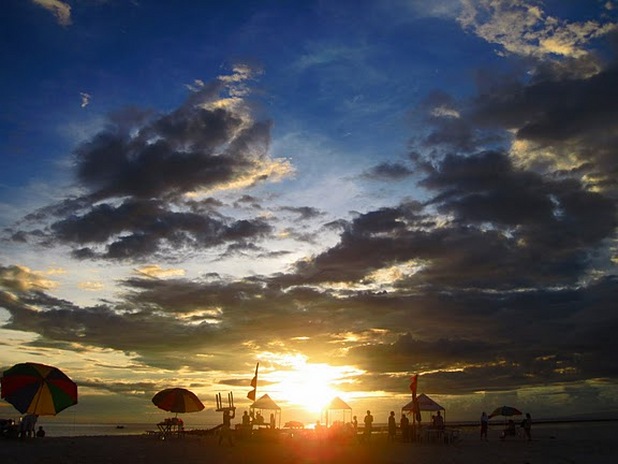
Mantigue Island is a paradise for divers in the Philippines

Black areas on the coast of the island is dotted with volcanic structures and black sand beaches. These beaches are black sand deposits of volcanic past conditions and can be found in the barangays of Agoh, Yumbing, Bug-ong and Cabu. The beaches are clean, spacious and unspoiled. The water is clear and free of pollution and restoration of truth!

Burias Shoal is a place for divers, although a little 'complicated, because of strong currents. And 'only thirty minutes by speed boat and diving schools are rewarded with sightings of jacks, tuna, surgeons, mackerel and barracuda. Shoal is also proud of his lush black coral covered with earth.

Batad Rice Terraces village, Philippines

The Banaue Rice Terraces (Tagalog: Hagdan-hagdang Palayan ng Banawe), also called payew terraces 2000 years that have been excavated in the mountains of Ifugao in the Philippines by ancestors of the indigenous peoples. Rice terraces are commonly known by Filipinos as the "eighth wonder of the world." It is commonly believed that the terraces were built with minimal equipment, largely by hand. The terraces are located approximately 1500 meters (5000 feet) square and covers 10,360 km (about 4,000 square miles) of the mountain. They are fed by an irrigation system from the rainforests above the terraces. It is said that if steps were terminated after that encircle half the globe.

Local rice plants still to this day and vegetables, terraces, although more younger Ifugaos can not find farming appealing, often opting for more lucrative hospitality industry generated Rice Terraces is a result of the gradual erosion of the characteristic "steps" , which need constant reconstruction and care. In 2010, the drought was still a problem, and the terraces to dry completely in March of that year.

Traditional jeepney, popular form of Philippines public transport

Jeepneys are the most popular public transportation in the Philippines. They were originally made from U.S. military jeeps left by the Second World War and are known for their flamboyant decoration and crowded seating. It became a symbol of Philippine culture.

The jeepney is a suitcase with a word "Jeep" and "Jitney."