
Showing posts with label Malaysia. Show all posts
Showing posts with label Malaysia. Show all posts
Thursday, 25 August 2011
Diving is superb in Malaysia

Trek to the summit of Mount Kinabalu in Malaysia

Mountain is sacred to local. They believe that the spirits of their ancestors inhabit the top of the mountain. Previously, the chicken sacrifices to reach the summit has always been, but today, this division takes place only once a year, when only seven chickens need to appease the spirits.
Mount Kinabalu is known to be one of the most accessible mountains in the world. No specialized skills needed for mountaineering climbing. The track that most tourists use is described as a trek and scramble. "The locals are starting to climb the mountain from 3 years and the oldest person to reach the summit was 80. But how much you enjoy climbing depends a lot on how fit you are and how you acclimate to the rarefied air at the top.
However, the mountain can be a dangerous place, especially during rain or when there is fog. On average, each year, one person will have great difficulty out of an estimated 20,000 people who are trying to climb. Higher slopes are very slippery in rain and dense fog reduced visibility to a few meters.
Although it is possible to climb to the summit and back in less than four hours, most climbers take two days with a break overnight at Laban Rata (3272.7 m). The final assault on the summit takes place in the early hours of the second day (most start at 2:30) to catch the sunrise at the summit. Mid-morning the fog begins to roll in, obscuring the view.
Climbing is about better weather in April, while November and December brings rain. The temperature ranges from 20-25 ° C to ease the main park to something close to zero up (weather permitting). Bring appropriate clothing, or you'll be cold and miserable. If possible, crawl under the full moon as it helps to illuminate the white cord that defines the way of climbing.
Visit traditional Iban longhouses, Malaysia
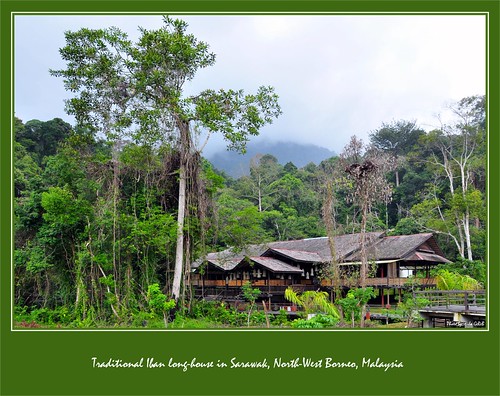
Sibu is the main river top tourist gateway Rajang, with small coastal towns and big houses and many Orang Ulu Iban.
There is no known adjective for the people of Sibu, although there have been many unofficial suggestions: Siburian, Sibuian, Sibunite, Sibu-Yan - none are officially recognized.
There was a marked increase in public buildings in recent years. Sibu now boasts the largest square in Malaysia, and the tallest building in Sarawak - Tower Sanyan (三洋 大厦 "Wisma Sanyan" in the Malay language), a waterfront, recently renovated, and many public parks. Sibu also has university-level courses offered by Laila Taib College (formerly known as United College Sarawak), who built a campus on the site of the old Sibu airport.In 2010, the Sarawak government has announced that Sibu Sarawak Islamic its own building complex, the second in the state after Kuching.
Sibu Jaya, located 25 km away, is developing a satellite town. Sibu Airport, built during the Second World War, was moved to its current location 23 kilometers from town near Sibu Jaya in 1994.
Subscribe to:
Posts (Atom)